Q.01What is the essence of leadership talent, and how do you recognise it?
KarinFor me, leadership starts with ownership. Taking responsibility for the choices you make and for their consequences. Not only when things go well, but especially when they don’t.
We felt that very strongly ourselves when we moved from employment to entrepreneurship. We didn’t just want ideas about what could be different or better. We wanted to actually be at the wheel and take responsibility for making it happen.
DeniseFor me, the essence of leadership talent is the ability to bring people with you. Good leadership doesn’t mean people work for you because they have to, but because they want to. A good leader inspires, gives trust and knows how to motivate people to get the best out of themselves.
I also think a leader should stand both in front of and behind their people. In front when direction, clarity and decisiveness are needed. Behind the team when people need room to take responsibility themselves. And when it’s needed, a leader protects and supports their people.
So you don’t recognise leadership talent only in someone who easily takes charge, but above all in how others respond to that person. People feel heard, dare to take responsibility and want to contribute. You also often see leadership talent in people who take initiative on their own, connect others and have influence without needing a formal title. A good leader creates trust, connection and a shared direction.
KarinAnd does someone have the resilience to carry on after a setback? I find that at least as important. In the end, leadership doesn’t only show itself in success. You learn a great deal from how someone deals with uncertainty, mistakes and setbacks.
Q.02What should leaders truly be prepared for in the coming years?
DeniseAbove all, leaders need to be prepared for constant change and uncertainty. Developments follow each other ever faster, in technology, AI, the labour market and the way people look at work. That asks leaders to be flexible and adapt quickly, without losing sight of the long-term vision and the human side.
KarinThat touches exactly on what we believe in at ECHT. We need to get much better at looking at what people can actually do, what drives them and what they can develop. A diploma or job title stays relevant, but it doesn’t tell the whole story. The same goes for leaders themselves, by the way. The skills that make you successful today aren’t automatically the skills you’ll need in five years.
DeniseIn a world where more and more gets automated, I think the human side of leadership becomes more important. Creating connection, giving trust, daring to make clear choices and taking people along through change. Leaders don’t need to have every answer themselves, but they do need to offer calm and direction when there is uncertainty.
KarinWe learned that on our own entrepreneurial journey too. For us, perseverance doesn’t mean doing the same thing at all costs. It means you keep believing in where you want to go, while staying flexible enough to change how you get there.
Q.03What should leaders stop doing?
KarinThinking they need to have the answer to everything. That may be one of the biggest pitfalls of leadership. As an organisation grows, it becomes more important to gather people around you who are better than you in certain areas.
DeniseAs far as I’m concerned, leaders can also stop holding on to fixed ideas of what talent, growth or leadership should look like. Not everyone develops along the same route, and the most visible or outspoken person doesn’t automatically have the most potential. By looking more broadly at behaviour, skills, learning ability and contribution, you make room for people who might otherwise be overlooked.
KarinThat ties in with our own careers. On paper, our move from employment to entrepreneurship may not always have been the most obvious next step. But if you look at drivers, skills and what gave us energy, it made a lot more sense.
So as a leader you have to stay curious about what lies behind someone’s CV. What gives someone energy? What do they naturally take responsibility for? Which skills are transferable? And what can they still develop?
DeniseFinally, I think leaders should stop creating a culture where mistakes are mainly something to avoid. If you want innovation, ownership and development, there has to be room to try, to learn and sometimes to choose wrong. As long as people take responsibility and learn from it, a mistake can be valuable.
Q.04Which decision made you or your team visibly stronger?
DeniseFor us, without a doubt, the choice to actually make the step from employment to entrepreneurship. It changed not only our work, but our relationship with responsibility. We chose not to be just part of an organisation anymore, but to be responsible ourselves for what we wanted to build.
KarinThat may sound logical in hindsight, but that choice meant much more than a different way of working. Entrepreneurship is often associated with freedom. For me, the real change lies in the responsibility that comes with that freedom.
You are responsible for execution. You are financially responsible. You are responsible for people, clients and decisions. And when something doesn’t work, you have to decide yourself what to do next.
DeniseThat made us stronger, precisely because it doesn’t always go well. For us, running a business has truly been a journey of falling down and getting back up. There have been successes, but also moments when we had to look at our course again, reconsider choices or simply push through.
KarinThat is perhaps where we learned the most. Vision is essential, but without perseverance and resilience it stays an idea. You only find out how strongly you believe in something when it gets harder to hold on to.
Together with Maurits Drenth we form a three-person board. We complement each other well: each brings different qualities, perspectives and experience, while we share the same vision, drive and ambition. That combination is what makes us strong as a board. We don’t need to be able to do everything ourselves, because we complement each other and carry responsibility together for where we want to take ECHT. Just as important: we share the same sense of humour and know how to keep things in perspective. Especially in business, where successes and setbacks can follow each other quickly, it helps enormously if you can laugh together.
Q.05Which leadership style genuinely gives you energy?
KarinLeadership with plenty of room for ownership. Making clear where we want to go together, and then trusting people in how they contribute to it. I don’t believe in an organisation where every decision has to go through the board. That ultimately makes people smaller instead of bigger.
That’s why we deliberately work as a project organisation, with a team of experienced specialists. People have their own expertise, and within projects they get a lot of responsibility and room to make decisions from that expertise. That asks us as a board not to sit in the middle of everything, but to set the frame and direction and trust that people know their craft.
DeniseAt the same time, freedom doesn’t mean anything goes. Precisely when you give someone a lot of trust and responsibility, you have to be clear about what you expect from each other. I think that’s an important combination: autonomy and accountability. Giving people room to use their own qualities, while also daring to hold each other to the contribution you make.
In a project organisation I find that especially powerful. Roles can differ per project: one time you take the lead, another time you contribute from your own specialism. It becomes less about hierarchy or job titles and much more about which expertise, qualities and skills are needed at that moment to get the best result together.
A leadership style that makes this possible, giving direction where needed, offering trust where possible and helping people play to their strengths, gives me the most energy.
KarinAnd I get energy from people with drive. People who see possibilities, take responsibility and don’t wait at every step for someone else to tell them what to do. That doesn’t mean everyone has to be an entrepreneur. It does mean people can show ownership from their own role.
DeniseThat’s also where the link with skills lies for us. When you give people room, you often see qualities emerge that stay hidden inside a tight job profile. In our team we see specialists add value from their own field, but also contribute much more broadly when a project asks for it. That kind of ownership and development gives us an enormous amount of energy.
Q.06And what costs you energy?
DeniseWaiting and seeing. Especially when people can explain very well why something is difficult, but are slower to move on to what is possible. Of course you have to see the risks and be critical. That is part of working professionally. But there is a difference between recognising risks and using them as a reason not to move.
KarinA lack of ownership costs me a lot of energy. When something goes wrong, I don’t want to talk for long about exactly whose problem it is. I want to know: what can we do about it, and who takes responsibility for the next step? We expect that of ourselves too. Running a business has shaped us in that. As an entrepreneur there is ultimately nowhere else to take a problem. You have to deal with it yourself.
DeniseAnd that is why resilience matters so much. Not dwelling on what went wrong, but learning from it and looking ahead again. That doesn’t mean you should play down a setback. Sometimes something simply hurts, commercially or financially. It’s fine to stop and acknowledge that. But after that, things need to move again.
KarinMaybe that is the common thread of our journey. We started our business out of our own drivers and a strong conviction about what we wanted to change. But a vision alone doesn’t build a company.
You have to be willing to carry responsibility for it. To execute. To take risks. To make mistakes. To make hard decisions. To sometimes change course. And above all, to keep going after a setback.
DeniseThat is ultimately also why we believe so strongly in ECHT’s vision. A person is much more than their diploma, job title or previous experience. What really moves someone often lies in the combination of drivers and skills. Our own journey has perhaps made us feel that even more strongly.
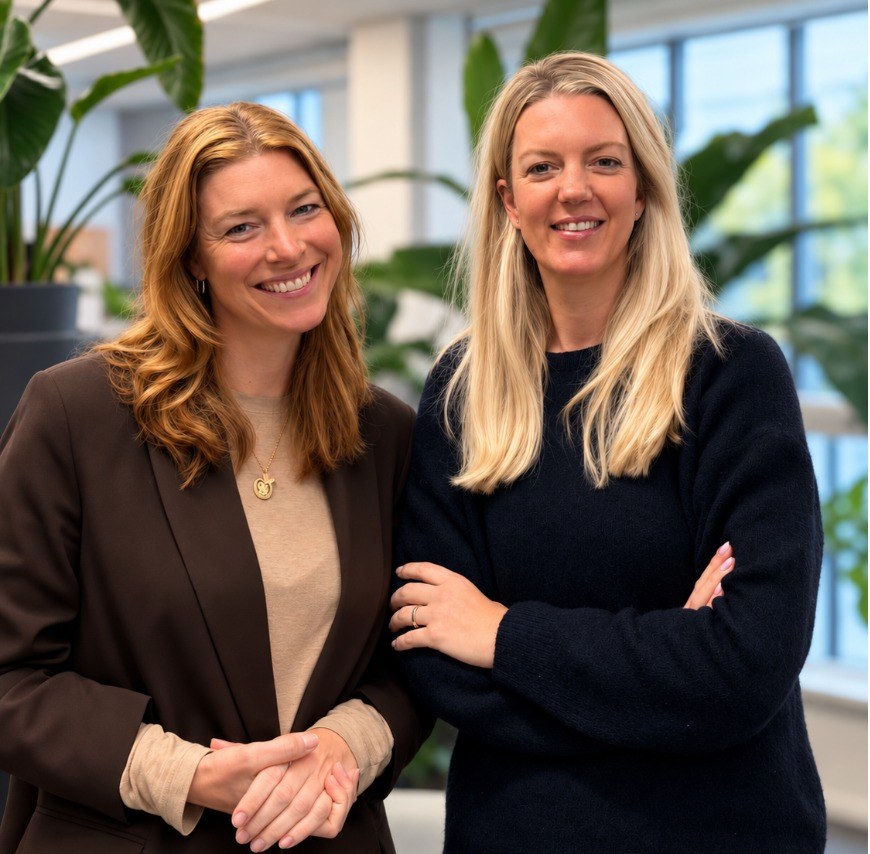
Vision shows you where you want to go. Ownership makes you take responsibility for getting there. Perseverance keeps you going on the way. And resilience lets you start again when the route turns out different from the plan. That is how Denise and Karin sum up their own journey, and it is exactly the summer season of a company: building while the wind blows. What makes this conversation stand out is that they look at their people the way they look at themselves. Drivers and skills first, not just the CV.